

The Death of the “Search Box” with regards to short-form video marketing
hink back to how you discovered your favorite products just a few years ago. If you were searching for the “best perfume for summer,” your journey began with a sterile white screen and a blinking cursor. You typed your query into a search box, hit enter, and were met with a list of blue links. You spent the next twenty minutes squinting at text-heavy reviews, trying to mentally reconstruct what “notes of Sicilian lemon” or a “base of white musk” actually felt like. It was an intellectual exercise—functional, but entirely disconnected from the senses.
Fast forward to 2026, and that process feels like a digital relic. Today, the discovery journey doesn’t start with a question; it starts with a vibe. You aren’t reading about the perfume; you are scrolling through a 15-second Reel where you see the elegant curve of the gold-capped bottle reflecting a Mediterranean sunset. You hear the crisp, satisfying spritz of the mist. Most importantly, you see the immediate, visceral reaction on the creator’s face—the slight intake of breath and the closing of eyes that tells you more about the fragrance than a thousand-word blog post ever could. This is the new gold standard: short-form video marketing. It isn’t just searching; it’s experiencing.
For Gen Z and Millennials, the traditional search engine has been relegated to a “utility” tool—used for checking facts or finding a specific URL. For everything else—fashion, food, travel, and lifestyle—the social feed is the primary discovery engine. This shift occurred because text-based search requires effort, whereas short-form video marketing offers evidence.
Modern users are inherently skeptical of curated “Best Of” lists that often feel like paid affiliate traps. They crave the “Proof of Life” that only video can provide. When a user searches for a new cafe in Jaipur on Instagram, they aren’t looking for a static menu; they are looking for the steam rising off the cardamom chai, the warm lighting at the corner table, and the genuine smile of the staff. Social platforms have leaned into this, transforming from entertainment apps into sophisticated “recommendation engines” that predict what you want to buy before you even have the words to describe it.
As we navigate the digital landscape of 2026, the barrier to entry for any brand has become incredibly steep: The 15-Second Mandate. The reality is simple yet brutal: if a potential customer cannot “see,” “feel,” and “understand” your product’s value within the first 15 seconds of an encounter, they will not buy it. In fact, they won’t even remember it.
The traditional marketing funnel—where you gradually build awareness over weeks—has collapsed into a single, high-speed interaction. At Markitrix, we’ve seen that the most successful brands are no longer those with the biggest traditional SEO budgets, but those who master short-form video marketing to translate the “scent” of their brand into a visual story that stops the scroll. We are no longer in the business of winning clicks; we are in the business of winning attention through visual proof. In 2026, if you aren’t visible in the feed, you don’t exist in the market.
In the early days of e-commerce, a glowing five-star review was the gold standard of credibility. But as we move through 2026, the “review economy” has faced a massive crisis of confidence. Between AI-generated bot reviews and paid endorsements, consumers have become increasingly cynical toward written testimonials. This is where short-form video marketing steps in as the ultimate arbiter of truth.
A high-quality video of a product in actual use provides a level of “social proof” that text simply cannot replicate. When a customer sees a real person—with real skin textures, unedited lighting, and genuine reactions—applying a serum or unboxing a pair of handcrafted shoes from a boutique in Jaipur, the “skepticism barrier” drops. You aren’t just reading that a product is good; you are witnessing its performance in real-time. This “Proof of Life” is the new currency of trust. If a picture is worth a thousand words, a 15-second clip of a product functioning exactly as promised is worth a thousand five-star reviews.
We have transitioned into what experts call the “Vibe Economy,” a marketplace where consumers buy into an aesthetic and a feeling as much as they buy into a functional benefit. Traditional blog posts and product descriptions are excellent for listing technical specifications—dimensions, ingredients, or shipping policies—but they are notoriously poor at capturing the “scent” or soul of a brand.
Short-form video marketing excels at communicating the intangible. It allows a brand to curate an atmosphere through color grading, music choice, and rhythmic editing. For a luxury resort or a high-end fashion label, a blog post might describe a room as “elegant and serene,” but a short-form video is the serenity. It captures the way the sunlight hits the linen sheets or the specific tempo of the ambient music in the lobby. By leveraging these sensory cues, brands can bypass the logical brain and speak directly to the consumer’s emotions, creating a “vibe” that sticks long after the user has scrolled past.
The shift toward video isn’t just a cultural preference; it is a biological imperative. Neuroscientists have long noted that the human brain is wired to process visual information significantly faster than text—approximately 60,000 times faster, to be precise. In the high-velocity environment of 2026, where the average attention span for digital content has shrunk to mere seconds, text is a high-friction medium. It requires the brain to decode symbols, turn them into concepts, and then visualize the result.
Short-form video marketing removes this friction entirely. By delivering the “visual” and the “concept” simultaneously, video allows for near-instantaneous comprehension. This is why a user can retain the core message of a 10-second video more effectively than a 500-word article. In the battle for mental real estate, video is a superpower. It allows marketers to pack complex brand narratives into bite-sized “retention loops” that align perfectly with how our brains are evolved to perceive the world. At Markitrix, we emphasize that if you want to be remembered, you have to stop asking your audience to read and start allowing them to see.
In the early days of e-commerce, a glowing five-star review was the gold standard of credibility. But as we navigate through 2026, the “review economy” has faced a massive crisis of confidence. Between AI-generated bot reviews and paid endorsements, consumers have become increasingly cynical toward written testimonials. This is where short-form video marketing steps in as the ultimate arbiter of truth.
A high-quality video of a product in actual use provides a level of “social proof” that text simply cannot replicate. When a potential customer sees a real person—with real skin textures, unedited lighting, and genuine reactions—applying a serum or unboxing a pair of handcrafted leather shoes from a boutique in Jaipur, the “skepticism barrier” drops. You aren’t just reading that a product is good; you are witnessing its performance in real-time. This “Proof of Life” is the new currency of trust. If a picture is worth a thousand words, a 15-second clip of a product functioning exactly as promised is worth a thousand five-star reviews.
We have transitioned into what experts call the “Vibe Economy,” a marketplace where consumers buy into an aesthetic and a feeling as much as they buy into a functional benefit. Traditional blog posts and product descriptions are excellent for listing technical specifications—dimensions, ingredients, or shipping policies—but they are notoriously poor at capturing the “scent” or soul of a brand.
Short-form video marketing excels at communicating the intangible. It allows a brand to curate an atmosphere through color grading, music choice, and rhythmic editing. For a luxury resort or a high-end fashion label, a blog post might describe a room as “elegant and serene,” but a short-form video is the serenity. It captures the way the sunlight hits the linen sheets or the specific tempo of the ambient music in the lobby. By leveraging these sensory cues, brands can bypass the logical brain and speak directly to the consumer’s emotions, creating an a tmospheric “vibe” that sticks long after the user has scrolled past.
The shift toward video isn’t just a cultural preference; it is a biological imperative. Neuroscientists have long noted that the human brain is wired to process visual information significantly faster than text—approximately 60,000 times faster, to be precise. In the high-velocity environment of 2026, where the average attention span for digital content has shrunk to mere seconds, text is a high-friction medium. It requires the brain to decode symbols, turn them into concepts, and then mentally visualize the result.
Short-form video marketing removes this friction entirely. By delivering the “visual” and the “concept” simultaneously, video allows for near-instantaneous comprehension. This is why a user can retain the core message of a 10-second video more effectively than a 500-word article. In the battle for mental real estate, video is a superpower. It allows marketers to pack complex brand narratives into bite-sized “retention loops” that align perfectly with how our brains are evolved to perceive the world. At Markitrix, we emphasize that if you want to be remembered, you have to stop asking your audience to read and start allowing them to see.
As we wrap up our exploration of the 2026 digital landscape, the most critical takeaway for any business owner is a shift in mindset: stop thinking like an advertiser and start thinking like a problem solver. In the era of the “Recommendation Age,” traditional commercials are often viewed as interruptions to be skipped or ignored. Conversely, short-form video marketing succeeds because it positions your brand as the immediate, visual answer to a user’s unvoiced question.
Whether a user is searching for the “scent” of a boutique hotel or the “sound” of a high-performance engine, they are looking for a connection. They aren’t looking for a polished, 30-second TV spot with a voiceover; they are looking for a conversation. By creating content that feels personal, raw, and authentic, you move from “pushing” a product to “pulling” a community. Short-form video marketing is the bridge that turns a cold search query into a warm brand relationship, proving that in 2026, the most effective marketing doesn’t feel like marketing at all.
At Markitrix, we understand that “virality” is a vanity metric if it doesn’t lead to a transaction. Many agencies can get you views, but very few can turn those views into a sustainable “Add to Cart” habit. Our approach to short-form video marketing is rooted in the “From Scents to Sales” philosophy. We don’t just focus on the aesthetic; we focus on the architecture of the sale.
We help brands in Jaipur and beyond identify their unique “visual hooks” and build a content ecosystem that guides a viewer from the first three seconds of curiosity to the final click of a purchase. Whether it’s through optimizing your video for AI-driven search engines (GEO) or implementing conversational commerce strategies in your DMs, our goal is to ensure your content is both discoverable and profitable. We bridge the gap between “Views” and “Revenue” by ensuring every frame of your video serves a strategic purpose.
The biggest barrier to success in 2026 isn’t a lack of equipment or a massive budget—it’s hesitation. The algorithm rewards consistency and authenticity over perfection. Our advice is simple: Start with one 15-second video today. Don’t wait for a professional film crew. Take your phone, find your best-selling product, and “Show, Don’t Tell.”
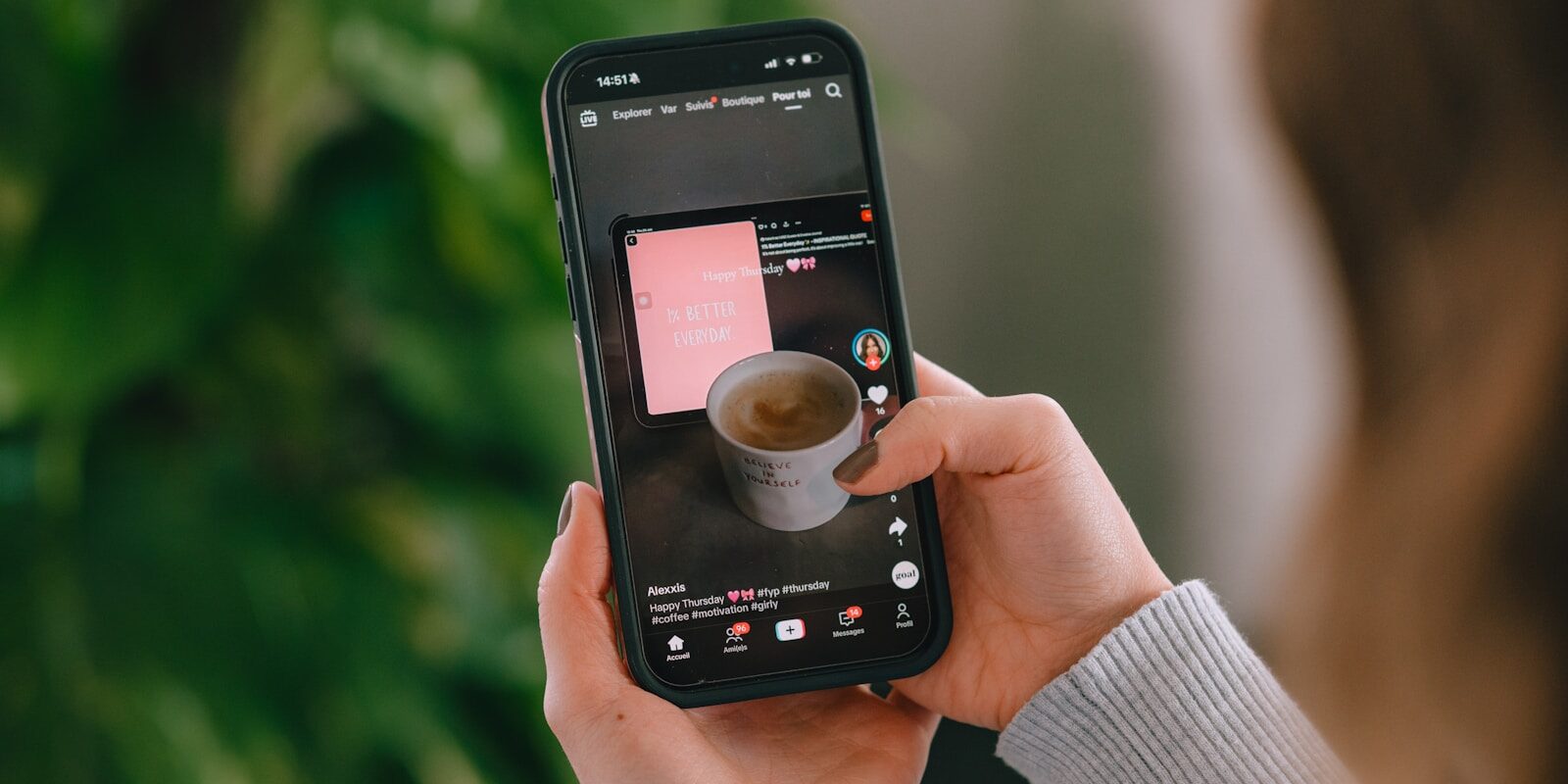 Show the texture, show the result, show the passion behind the brand. Use the principles of short-form video marketing we’ve discussed—the hook, the on-screen text, and the direct call to action. In the time it took you to read this blog, thousands of searches were conducted in social feeds. The question isn’t whether your customers are looking for you; it’s whether you’ve given them something to see. Join the conversation, record your first clip, and watch how “scents” truly turn into “sales.”